
CCPA Cybersecurity Audit: Is Your Business Ready for 2027?
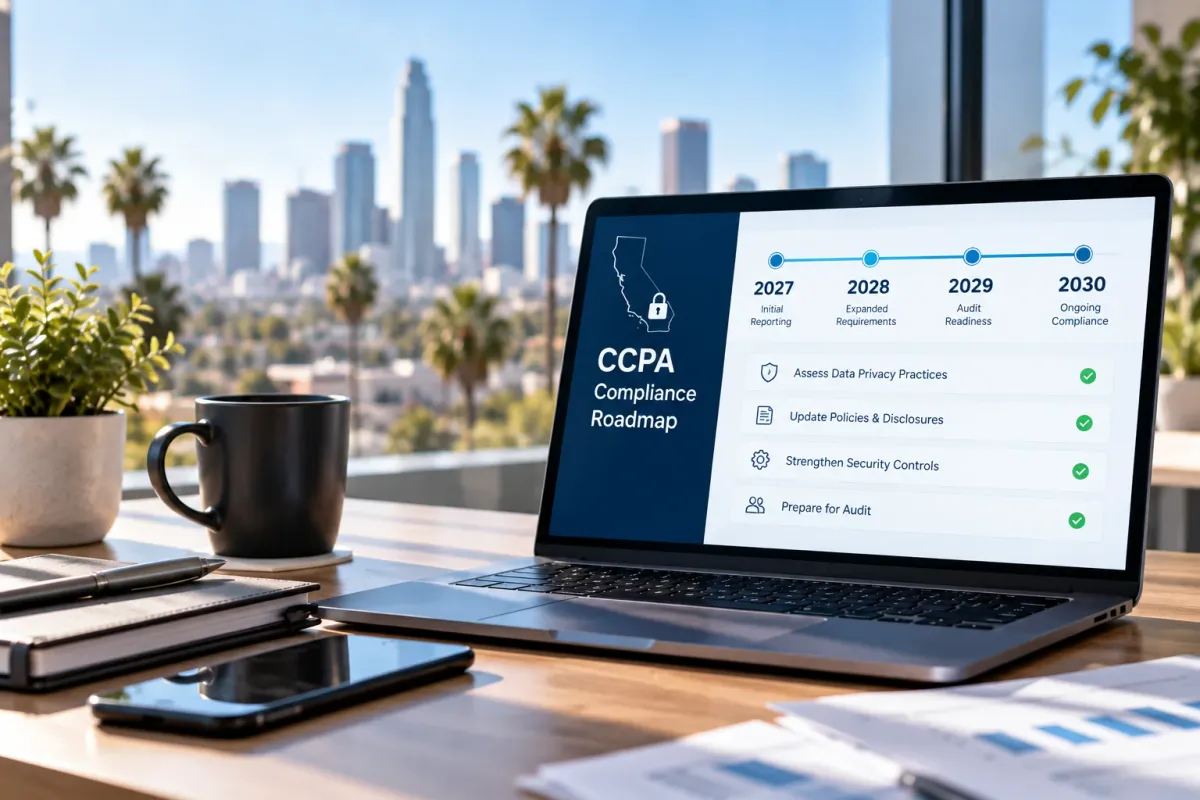
Here's a date most California executives haven't circled yet: January 1, 2027. For larger organizations covered by California's new privacy rules, that's when the first CCPA cybersecurity audit period begins, and the auditor won't be grading your intentions. They'll be grading a full year of evidence, starting in about three months.
If your organization handles a lot of Californians' personal information, this is no longer a someday problem. It's a budget-season problem, and budget season is now.
The Quick Take
California now requires annual, independent cybersecurity audits for businesses whose data processing is deemed a "significant risk" to consumers. Revenue alone doesn't decide it; data volume matters too.
The biggest companies' first audit period runs through calendar 2027, with an executive certification due April 1, 2028. Smaller covered businesses follow in 2029 and 2030.
Auditors test 18 control areas, from multi-factor authentication to backups, and they want proof, not promises. The gaps you close in the next 90 days count.
What the CCPA Cybersecurity Audit Rule Actually Requires
The California Privacy Protection Agency finalized new regulations in 2025, and the cybersecurity audit piece is the one with the longest runway and the sharpest teeth. According to an August 2026 analysis from Alston & Bird, a business must complete annual audits if it meets either of these tests:
It earns 50% or more of its annual revenue from selling or sharing personal information, or
It has annual gross revenue above the CCPA threshold (about $26.6 million after inflation adjustments) and processes personal information of 250,000 or more consumers, or sensitive personal information of 50,000 or more consumers.
That second test is where many mid-market organizations in Southern California should pause. A regional healthcare group, a multi-location dealer, a credit union or a professional services firm with a large client database can hit those numbers faster than you'd think. "Sensitive" includes things like Social Security numbers, financial account details, health information and precise geolocation.
The deadlines, by revenue tier
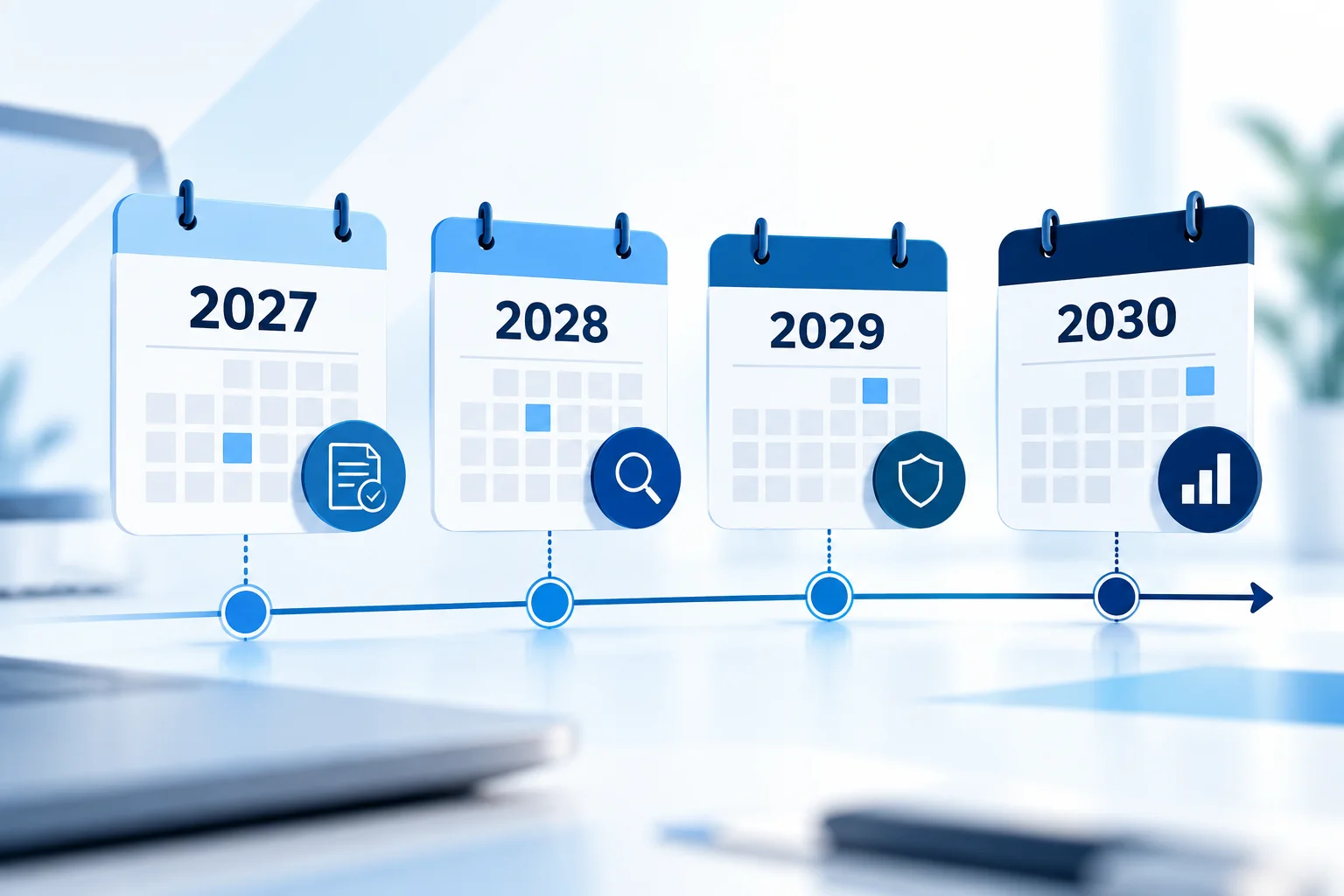
The deadlines are staggered, per the same Alston & Bird summary and EisnerAmper's July 2026 overview:
Over $100 million in revenue: audit covers 2027; certification due April 1, 2028.
$50–$100 million: certification due April 1, 2029.
Under $50 million: certification due April 1, 2030.
Separately, formal privacy risk assessments already apply to new high-risk processing as of January 2026, and assessments for pre-existing activities are due by December 31, 2027. Yes, that's two compliance clocks. California likes to keep things interesting.
Why This Isn't Just "Another Compliance Checkbox"
Three details make this rule different from the policy binder that lives in a drawer.
1. The auditor has to be independent. Alston & Bird notes that the auditor cannot be the same party that designs, implements or maintains your cybersecurity program. So the people fixing your gaps and the people grading them must be different, the way you wouldn't let a student grade their own final.
2. An executive signs it under penalty of perjury. A member of executive management must certify the audit, including that the business didn't try to influence the auditor. That moves cybersecurity from the IT closet to the corner office.
3. Evidence beats assertions. As BDO's September 2026 readiness guidance puts it, being mature and being audit-ready are not the same thing. Auditors look for proper scope, actual testing and current documentation. "We're pretty sure MFA is on everywhere" is not evidence.
The Good News: You Probably Don't Have to Start Over
If you already work against the NIST Cybersecurity Framework, CIS Controls, ISO 27001 or a SOC 2 report, BDO notes you may be able to build on that work, as long as it covers the systems that touch California consumer data, maps to all 18 required components, and includes real testing rather than interviews alone.
The 18 components read like a greatest-hits album of security basics: authentication and MFA, encryption, access controls, asset and data inventories, secure configuration, vulnerability scanning, audit logs, network monitoring, malware protection, segmentation, security awareness training, vendor oversight, data retention and disposal, incident response, and business continuity. None of it is exotic. The hard part is doing all of it consistently and being able to prove it.

Your CCPA Cybersecurity Audit Readiness Checklist for This Quarter
Here's what a busy leadership team can do before the calendar flips:
Confirm whether you're in scope. Pull your 2026 revenue and a realistic count of California consumer records, including sensitive data. Review it with your legal or compliance team, because thresholds and definitions matter.
Map where California personal data lives. CRM, EHR, ERP, file shares, cloud apps, backups and that one spreadsheet everyone swears was deleted.
Run a gap analysis against the 18 components. Rate each control as in place, partial or missing, and note what evidence exists today.
Fix the high-impact gaps first. MFA coverage, patching and vulnerability scanning, logging and monitoring, and tested backups typically reduce the most risk per dollar.
Start collecting evidence now. Screenshots, reports, ticket histories and training records, stored somewhere organized and retained for five years.
Review vendor contracts. Your service providers may need to cooperate with the audit. Better to ask now than in March 2028.
Line up an independent auditor early. Qualified, independent auditors will be in demand as 2027 approaches.
Put it in the 2027 budget. Remediation plus audit fees belong on this year's planning agenda, not next year's surprise list.
Where a Managed IT Partner Fits
Because of the independence rule, the partner who helps you strengthen your controls shouldn't be the one who audits them. That's a feature, not a bug. A managed IT and cybersecurity partner can help with the heavy lifting: cyber vulnerability audits and compliance gap analysis, 24/7 monitoring, patch management, backup and disaster recovery, and the documentation that makes an independent auditor's job (and your bill) smaller.
For organizations across Ontario, the Inland Empire and Southern California, that often means fewer surprises, cleaner evidence and less weekend work for your internal team. This post is general information, not legal advice, so pair your technical plan with guidance from your compliance or legal team.
The Bottom Line
California's cybersecurity audit rule turns "we take security seriously" into something you have to prove, with an executive's signature on it. The first audit year for the largest businesses starts January 1, 2027, and every smaller tier is right behind. The organizations that start their gap analysis this quarter will spend 2027 collecting evidence instead of scrambling for it.
Not sure where you stand? Intelesys offers a free, no-pressure assessment to help you see which controls are solid and which need attention before your audit clock starts. Call us at 909-295-7518 or reach out through our contact page.