
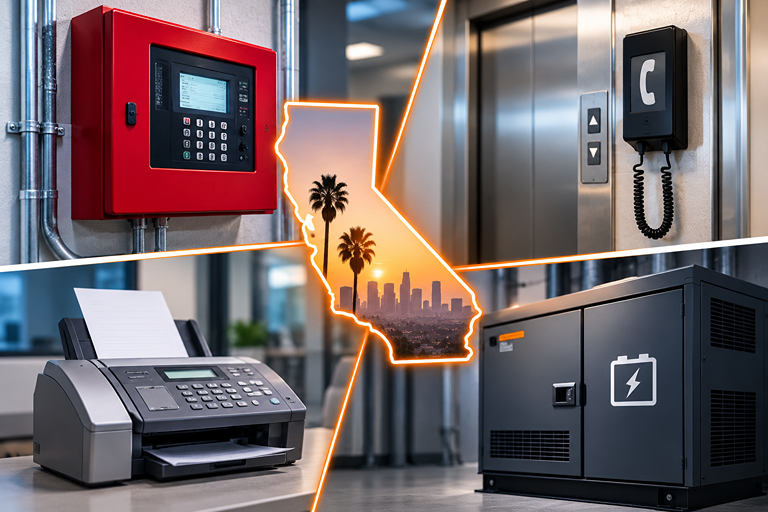
POTS Line Replacement: California's Copper Countdown
Somewhere in your building there's a phone line nobody has thought about since it was installed. It runs the fire alarm panel, the elevator emergency phone or the fax machine accounting still swears by. And in California, the copper network those lines ride on is being retired. If you haven't started your POTS line replacement plan, now is the time, before a carrier letter turns it into a fire drill.
The Quick Take
The FCC has cleared AT&T to discontinue copper voice service at more than 184,000 California locations, with shutoffs targeted for as soon as June 1, 2027.
Alarm panels, elevator phones, gate call boxes, fax lines and older modems often depend on copper, and many businesses don't have a full list of theirs.
Take inventory now, test replacements before you need them, and plan power backup with Southern California's multi-day outages in mind.
What's Happening With Copper Landlines in California
"POTS" stands for Plain Old Telephone Service: the traditional copper phone line. It was the standard for decades because it was simple, and because the phone company powered it from its own central office, so it kept working when your building lost power.
That era is ending. In June 2026, the FCC cleared AT&T's request to discontinue copper voice services at more than 184,000 California locations, and AT&T has said it wants to start turning off service as soon as June 1, 2027. AT&T also filed suit to preempt California rules that it says block the retirement, and it plans to shut down most of its copper network by 2030.
California regulators are pushing back. The state's carrier-of-last-resort rules require AT&T to show that an equivalent alternative is available before retiring copper at a location. But on October 30, FCC Chairman Brendan Carr circulated a draft order that would preempt that requirement. It hasn't been voted on yet, and lawsuits are moving on several fronts.
Translation for busy executives: the exact date for your address is still being argued in Washington, Sacramento and federal court. The direction isn't. Copper is going away. The only question is whether you switch on your schedule or the carrier's.
The Lines You Forgot You Had
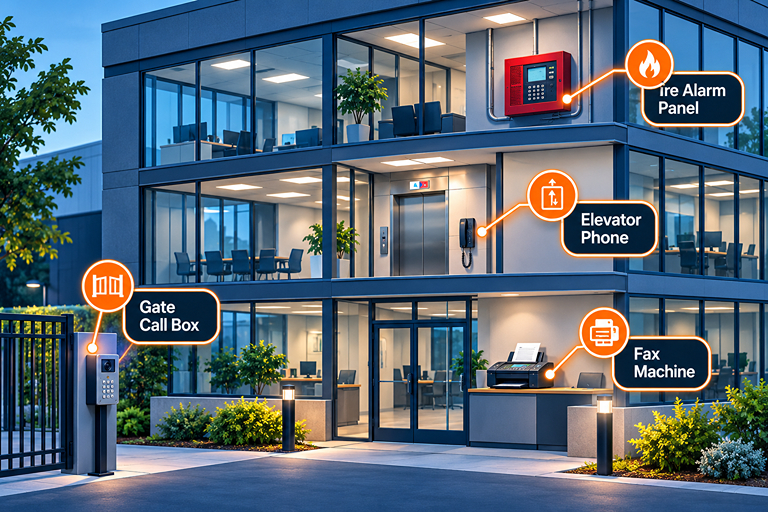
Most organizations moved their desk phones to VoIP years ago. The trouble is the "other" lines: the ones that don't ring at a desk and rarely appear on anyone's IT inventory. Common examples:
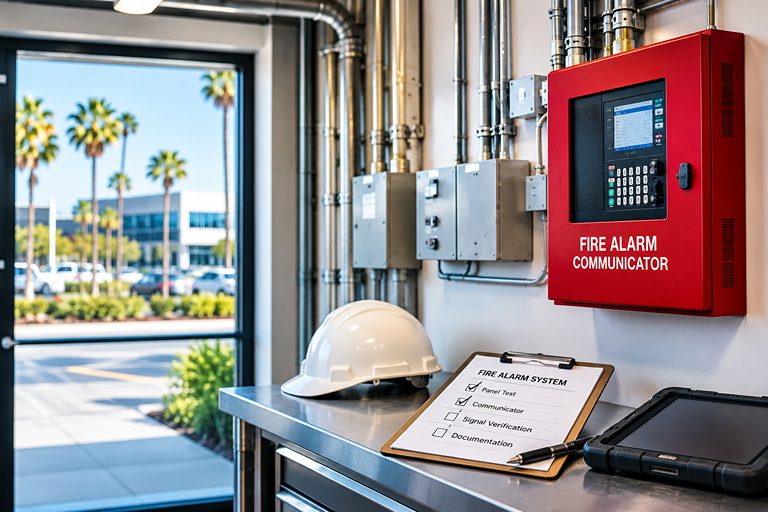
Fire alarm and intrusion panels that dial out to a monitoring center
Elevator emergency phones, which building codes and inspectors care about a lot
Gate and door call boxes tied into access control
Fax lines, still common in healthcare, legal and government offices
Older point-of-sale terminals, building automation and SCADA modems in manufacturing and utilities
A "backup" line at the front desk or in the server room that nobody has tested since the Obama administration
These are exactly the systems where "it stopped working and nobody noticed" turns into a failed inspection, a missed alarm signal or a very awkward call with your insurer.
Why POTS Line Replacement Isn't Just Swapping a Dial Tone
Replacing a copper line with VoIP, a cellular communicator or a carrier's wireless "landline" service can work well. But a few details deserve real attention.
Power is now your problem
Copper lines draw power from the phone company. Fiber, VoIP and wireless replacements need power at your site. Tech Times reports that AT&T's Phone-Advanced replacement provides 24-hour battery backup, which critics argue is inadequate for multi-day wildfire-related outages. If your Inland Empire facility has ever sat through a multi-day public safety power shutoff, you know why that matters.
Not every device speaks VoIP fluently
The same report notes that fax machines, medical alert systems and TTY devices may not work reliably over VoIP. Alarm panels can be just as fussy. Each device needs to be tested on its replacement, not assumed to work.
911 and location details matter
When phones move to the internet, the address 911 dispatchers see has to be configured correctly. In a multi-building campus or a site with remote workers, that takes deliberate setup.
Your POTS Line Replacement Checklist
Here's a practical list you can start this week:
Pull your phone bills. Every line item with a phone number is a clue. Match each number to a physical device and location.
Walk the building. Check alarm panels, elevator cabs, gates, fax machines, server rooms and the old phone closet. Label what you find.
Read your carrier mail. Copper discontinuance notices can look like routine billing updates. Route them to one owner.
Rank lines by consequence. Life-safety systems (fire, elevator) come first, then operations, then convenience.
Talk to your alarm and elevator vendors. Ask what replacement communicators they support and whether your local fire authority has specific requirements.
Plan backup power on purpose. Decide how many hours each critical line must survive an outage, then size batteries or UPS units to match.
Test before cutover. Send a real alarm signal, place a test call from the elevator and confirm 911 location data. Then document the results.
Consolidate while you're at it. Lines that exist only "because they always have" can often be cancelled, which is the rare IT project that lowers a bill.
Healthcare, government and education organizations should also loop in their compliance or legal team, since life-safety, accessibility and records requirements vary. This post is general information, not legal advice.
Where Hosted Phone Systems in Southern California Fit
A copper retirement is also a useful excuse to tidy up your whole communications picture. If your desk phones, mobile workers and building systems are spread across three carriers and a closet full of mystery boxes, a planned move to modern hosted phone systems can simplify management, strengthen continuity and give you one place to look when something breaks. The goal isn't new technology for its own sake. It's fewer surprises.
The Bottom Line
California's copper retirement is tied up in regulatory fights, but the timeline is moving toward mid-2027 or later, and the lines most at risk are the ones nobody is watching. An inventory and a tested replacement plan today cost far less than an emergency scramble after a carrier notice, or a failed inspection.
Not sure how many copper lines your organization still has? Intelesys can help you find them, rank them and plan a calm, tested transition. Ask about a free assessment by calling 909-295-7518 or reaching out through our contact page.