

Reducing Reactive IT Costs: A Proactive Strategy for Mid-Market Companies | Intelesys
IT Strategy, Managed Services, Mid-Market Leadership
Why Reactive IT Is Costing Mid-Market Companies More Than They Think
As a senior software engineer who has spent years inside mid-market environments—from healthcare and manufacturing to professional services and education—I’ve seen a common pattern: IT is treated like a fire department. It’s called only when something is burning. On paper, this looks lean. In practice, it’s one of the most expensive ways to run technology. For CEOs, CTOs, and COOs, the real cost of reactive IT rarely shows up in a single budget line. It hides in downtime, stalled growth, compliance risk, and the quiet exodus of frustrated talent. This is where a proactive, managed approach—like the one we champion at Intelesys—stops being “nice to have” and becomes a strategic necessity.
The Hidden Balance Sheet of Reactive IT
Most mid-market organizations don’t think they’re “doing reactive IT.” They see a small internal team, maybe one or two key vendors, and a ticketing system. Issues get fixed, projects eventually ship, and the lights mostly stay on. Yet when we peel back the layers during an Intelesys assessment, the same patterns emerge across healthcare, finance, manufacturing, and the public sector: IT spend is fragmented, risk is unquantified, and leadership is making decisions with partial visibility.
Industry data backs this up. Studies from Gartner and IDC consistently show that unplanned downtime costs mid-sized organizations between $5,600 and $9,000 per minute, depending on sector. For a 200-employee professional services firm billing $200 per hour, a single four-hour outage can quietly erase $160,000 in billable time—before you factor in reputational damage or regulatory exposure. Yet those losses rarely appear under “IT costs.” They’re buried in lost revenue, overtime, and missed opportunities.
📌 Key Takeaway: Reactive IT doesn’t just increase support costs; it inflates the total cost of ownership across operations, compliance, and growth.
How Reactive IT Shows Up in Your Day-to-Day Operations
From the inside, reactive IT feels like “being busy.” Tickets are always in the queue, the team is constantly context-switching, and every week brings a new “urgent” issue. From an executive lens, however, the pattern is clearer: your technology is driving the agenda instead of enabling the strategy. Here’s how that typically manifests across mid-market organizations:
Chronic downtime and slow systems: Aging infrastructure, unpatched servers, and oversubscribed networks create frequent performance issues. Staff normalize “reboot rituals” and workarounds instead of addressing root causes.
Shadow IT and tool sprawl: Departments adopt their own SaaS tools to bypass slow IT queues. Before long, finance is reconciling five overlapping subscriptions, and security has no clear system-of-record for data flows.
Compliance by panic: In healthcare and finance especially, HIPAA and other regulatory audits trigger last-minute scrambles. Policies, logs, and evidence exist—but are scattered and incomplete.
Talent drain: Your best technical people didn’t sign up to be firefighters. When every day is a crisis, they either burn out or leave for environments where they can build, not just fix.
From an engineering perspective, these are all symptoms of the same root problem: the absence of a proactive, observable, and automated foundation. Without that, you’re always discovering issues when users do—at the most expensive possible moment.
What Proactive, Managed IT Looks Like in Practice
Proactive IT isn’t just “monitoring” or “outsourcing help desk.” It’s a deliberate shift from incident-driven work to engineered reliability. At Intelesys, we think about it the way senior developers think about production systems: design for failure, automate the boring parts, and measure everything that matters. That mindset translates into concrete practices your leadership team can recognize and govern.
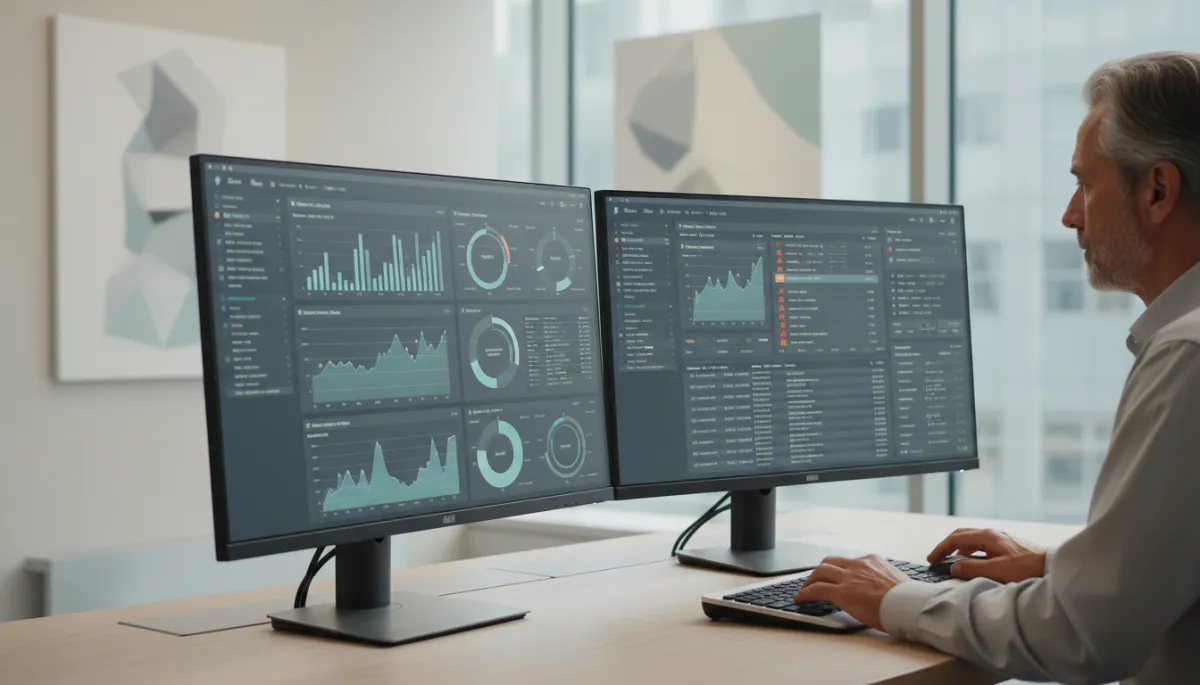
Real-time monitoring and automation catch issues hours before users feel the impact.
For example, instead of waiting for staff to complain that “the system is slow,” we instrument key applications and infrastructure with health checks and thresholds. A simple, practical pattern looks like this:
import psutil
import smtplib
from email.message import EmailMessage

CPU_THRESHOLD = 85.0  # percent
MEM_THRESHOLD = 80.0  # percent

def send_alert(subject: str, body: str) -> None:
    msg = EmailMessage()
    msg["Subject"] = subject
    msg["From"] = "[email protected]"
    msg["To"] = "[email protected]"
    msg.set_content(body)

    with smtplib.SMTP("smtp.yourdomain.com") as smtp:
        smtp.send_message(msg)

def check_resources() -> None:
    cpu = psutil.cpu_percent(interval=60)
    mem = psutil.virtual_memory().percent

    if cpu > CPU_THRESHOLD or mem > MEM_THRESHOLD:
        subject = "⚠️ Server resource threshold exceeded"
        body = f"CPU: {cpu}%, Memory: {mem}%"
        send_alert(subject, body)

if __name__ == "__main__":
    check_resources()
This is intentionally simple, but it illustrates an important mindset shift. Instead of hoping a critical server behaves, we define explicit thresholds and push alerts before performance degrades. At scale, Intelesys applies this pattern across your environment—servers, network, backups, cloud workloads—using enterprise-grade tooling and 24/7 monitoring, not just ad hoc scripts. The result is fewer surprises, faster mean time to resolution, and a measurable reduction in business interruptions.
💡 Pro Tip for Leaders: Ask your IT team to show you their top five automated checks and how often they prevent user-visible incidents. If the answer is vague, you’re likely still operating reactively.
Quantifying the Business Impact: From Cost Center to Strategic Asset
Executives don’t need to read log files, but they do need clear cause-and-effect between IT posture and business outcomes. When we transition mid-market clients to a proactive model, three categories of impact consistently surface within 6–12 months:
Reduced unplanned downtime: By hardening infrastructure, standardizing patching, and adding predictive monitoring, we routinely see unplanned outages drop by 40–60%. For a manufacturer running two shifts, that can reclaim dozens of production hours per quarter.
Lower incident volume and faster resolution: When common issues are automated away or resolved before users notice, ticket volume shrinks. Intelesys clients often see 25–35% fewer tickets, with average resolution times cut in half. That directly improves staff productivity across departments.
Stronger security and compliance posture: Proactive vulnerability management, standardized configurations, and audit-ready logging reduce both the likelihood and impact of incidents. In healthcare and finance, that translates to fewer reportable breaches and smoother audits—critical in protecting brand trust.
To make this visible at the board level, we often help leadership teams implement a simple, executive-friendly scorecard. Behind the scenes, it’s powered by data—uptime metrics, patch compliance, backup health, incident trends. But what you see is a clear, quarterly narrative: risk moving down and capacity for innovation moving up.
executive_scorecard = {
    "uptime_critical_systems": "99.95%",
    "average_incidents_per_month": 18,
    "mean_time_to_resolution_minutes": 42,
    "patch_compliance_core_servers": "97%",
    "successful_backup_verification_rate": "100%"
}

for metric, value in executive_scorecard.items():
    print(f"{metric.replace('_', ' ').title()}: {value}")
You don’t need to write the executive_scorecard yourself, but you should expect your IT leadership or managed partner to produce this level of clarity. It’s the difference between “We’re busy” and “Here’s how technology is de-risking operations and enabling growth.”
A Practical Path Forward: From Firefighting to Foresight with Intelesys
Moving away from reactive IT doesn’t require a big-bang transformation. In fact, the most successful mid-market journeys start with a focused, data-driven assessment and a 90-day roadmap. As engineers, we approach your environment the way we would inherit a complex application: inventory what exists, identify critical dependencies, and prioritize the highest-risk gaps first.
Step 1: Visibility. Intelesys conducts a comprehensive assessment of your infrastructure, security posture, and operational processes. We surface hard numbers on uptime, patching, backup success, and incident trends—often for the first time in a single view.
Step 2: Stabilization. We tackle the most critical issues: unsupported systems, missing backups, exposed endpoints, and single points of failure. The goal is to stop new fires from starting while we design a long-term architecture.
Step 3: Automation and governance. We introduce monitoring, alerting, patch management, and standardized playbooks. Executives receive regular, plain-language reports that tie IT performance to business risk and resilience.
For CEOs and COOs, the outcome is simple: fewer unpleasant surprises and more predictable operations. For CTOs and IT Directors, it’s the space to move from “keeping the lights on” to driving digital initiatives that actually differentiate your organization—whether that’s patient experience in healthcare, smart factories in manufacturing, or data-driven decision-making in the public sector.
Ready to See What Reactive IT Is Really Costing You?
If your leadership meetings still include phrases like “We’ll deal with that when it breaks” or “IT is doing the best they can,” you’re likely leaving real money—and real resilience—on the table. The shift to proactive, managed IT is not just a technical upgrade; it’s a strategic reframe of how your organization thinks about risk, reliability, and growth.
Intelesys partners with mid-market organizations across healthcare, manufacturing, professional services, finance, education, and the public sector to make that shift tangible. We bring the engineering discipline of a high-performing software team to your entire IT landscape—so your people can focus on patients, products, citizens, and clients, not passwords and printers.
CTA: If you’re ready to quantify the true cost of reactive IT and build a roadmap toward proactive resilience, contact Intelesys for a proactive IT assessment. In a single engagement, we’ll give you clear visibility into your current risk, practical recommendations for the next 90 days, and a strategic view of how technology can support where you want the business to be in three years—not just three weeks.